

The Bugatti Interior That Changed Hypercars Forever
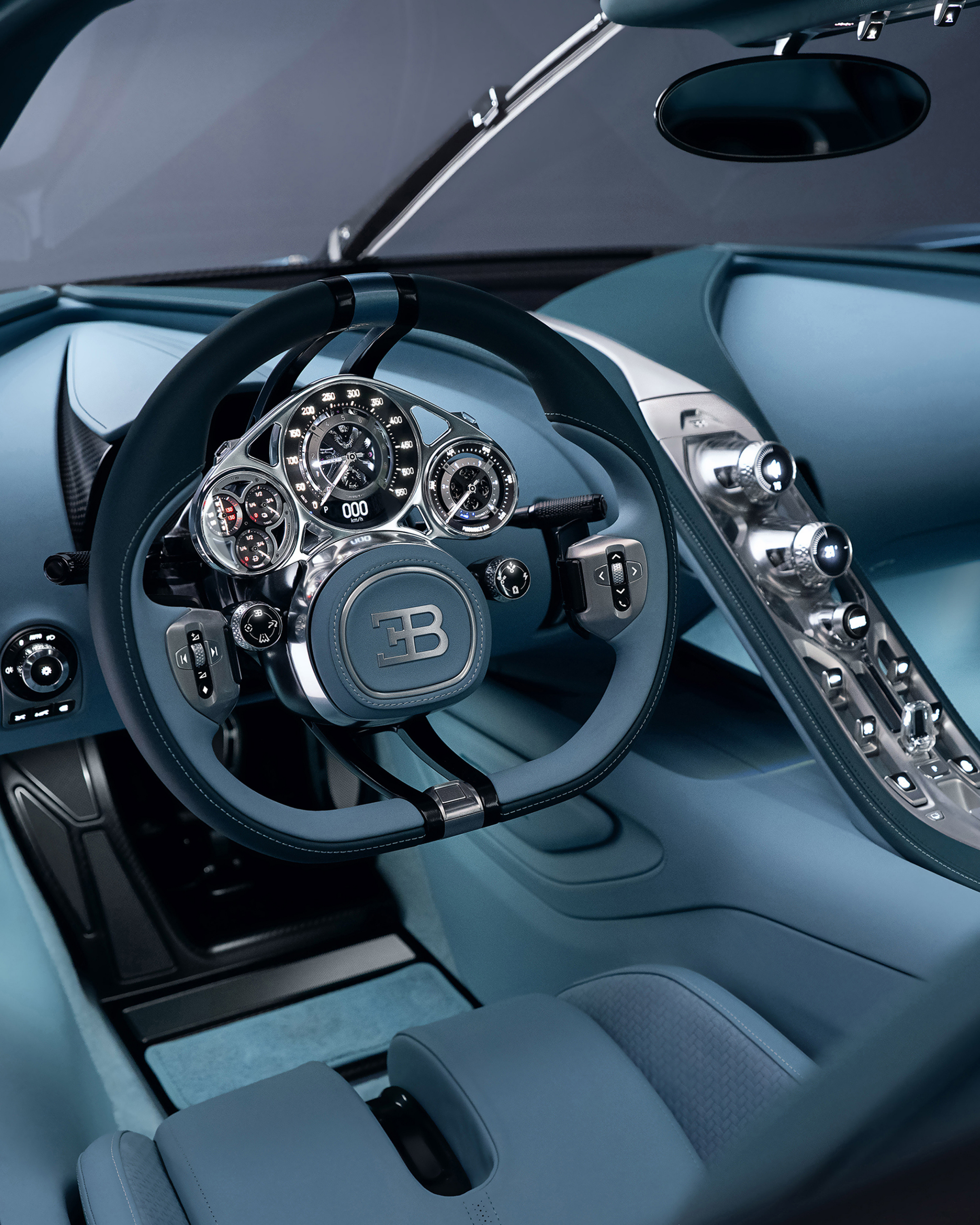
In an era where even the most prestigious brands compete through ever-larger screens and digital spectacle, Bugatti has taken a radically different direction with the Tourbillon. Instead of building a cockpit defined by software, the French marque has engineered an interior guided by permanence, structure, and mechanical clarity. The cabin is organized around a strong central C-line that divides driver and passenger into two balanced zones, reinforced by a horizontal color split that makes the architecture instantly legible.
There is no decorative excess, no visual noise, no reliance on trend-driven styling cues. Every surface, junction, and proportion is intentional, communicating function before emotion. The result feels less like a futuristic concept and more like a timeless object designed to outlive the decade that produced it.
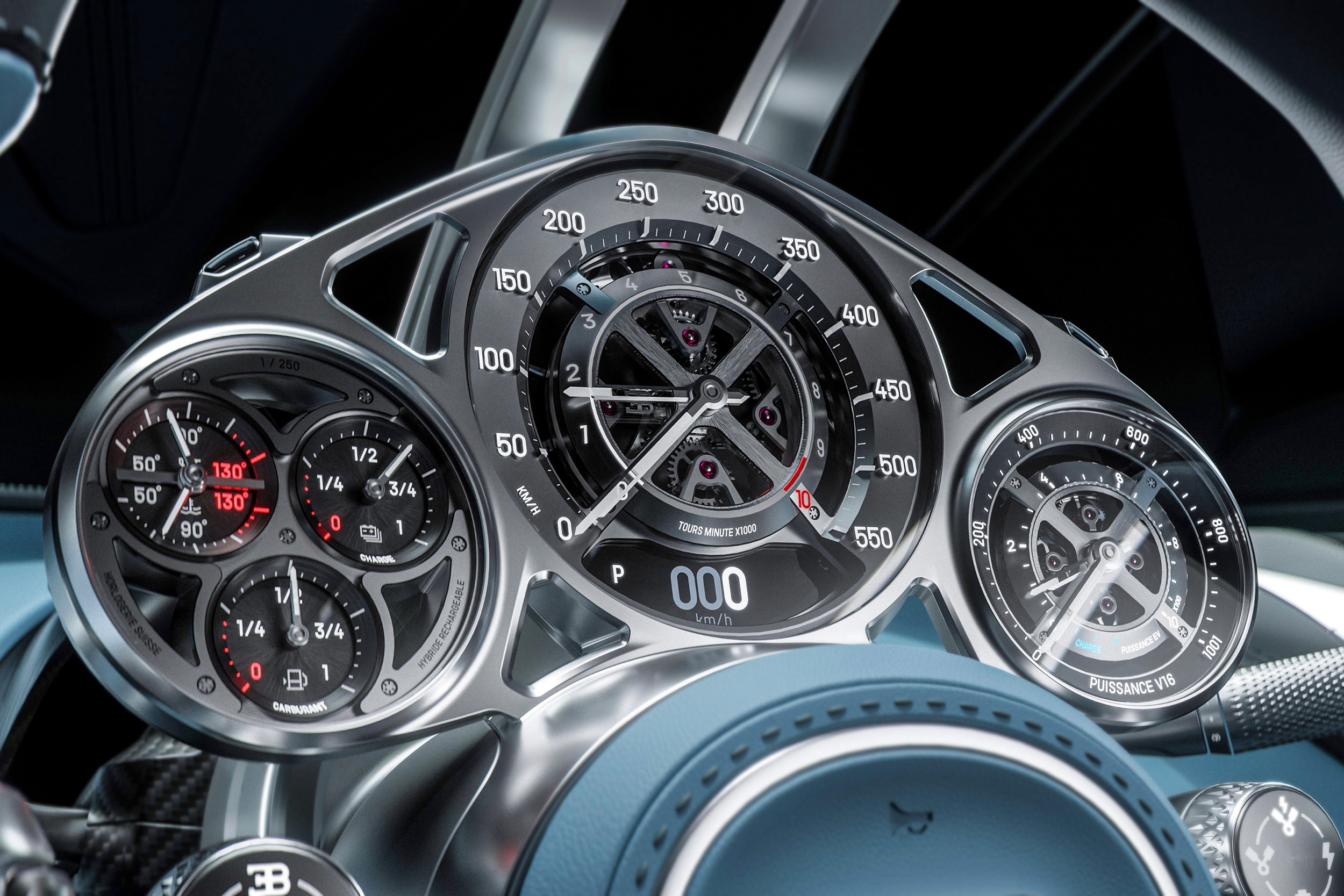
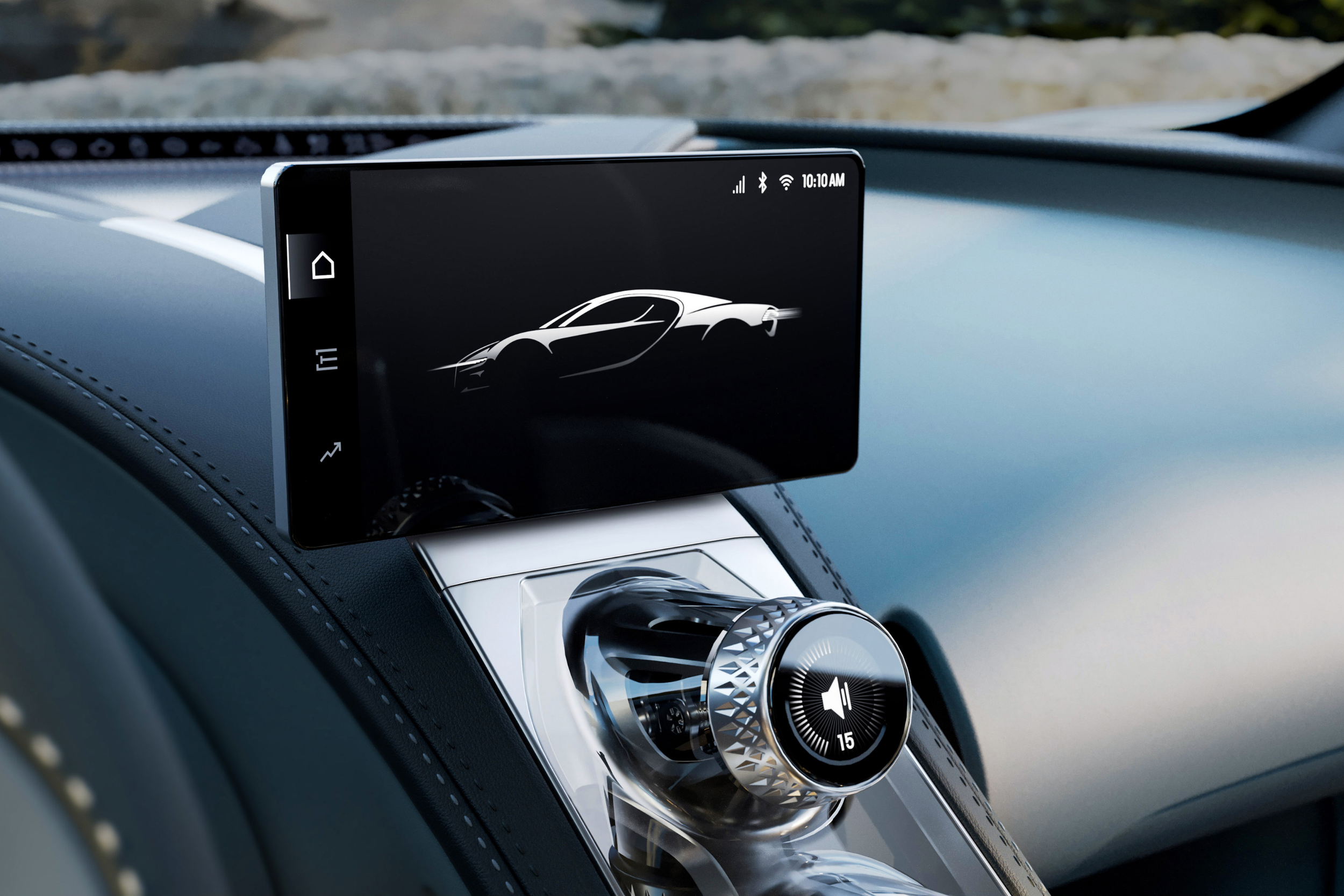
Bugatti describes this philosophy as car couture, borrowing the discipline of Haute Couture while stripping away ornamentation. Materials are selected for tactility and durability rather than theatrical effect, with leathers engineered to age gracefully and new textiles developed specifically for performance seating. Digital technology is deliberately restrained. The central screen remains hidden within the dashboard and deploys only when required, preventing the cockpit from visually aging as software evolves. Most interactions rely on physical controls calibrated for resistance and precision, reinforcing the belief that mechanical interfaces remain intuitive and satisfying over generations. The name Tourbillon itself references nineteenth-century watchmaking, evoking the pursuit of precision, longevity, and enduring value rather than temporary innovation.
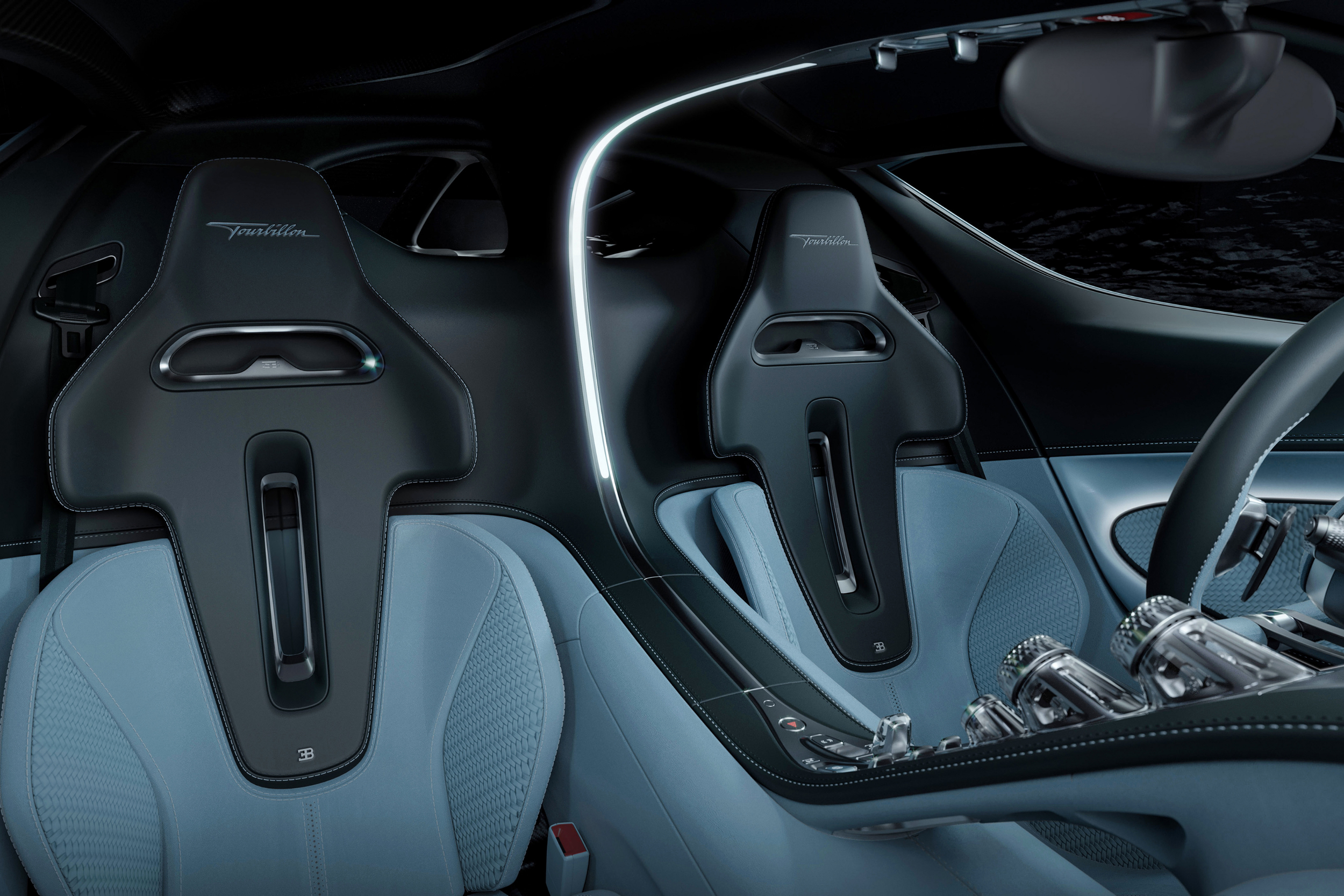
At the heart of the cabin sits a fixed-hub steering wheel and a fully analogue instrument cluster developed with Swiss master watchmakers. The center of the wheel remains stationary while the rim rotates around it, integrating controls and paddle shifters within real engineering constraints such as safety systems and crash regulations. Behind it, visible mechanical components, skeletonized architecture, milled aluminum, and crystal protection transform the cluster into a functional mechanical sculpture.

Bugatti Official Website

© Bugatti